Are E-Signatures Legal for Leasing and Loan Agreements in Sri Lanka?
Sri Lanka's Electronic Transactions Act recognises e-signatures. A practical guide for finance companies on which leasing and loan documents can be signed digitally today, what is excluded, and how to roll out safely.
On this page (6)
If you work in operations or compliance at a Sri Lankan finance company, you've probably had this conversation: "Digital signing sounds great, but will it stand up legally?"
It's the right question to ask. The good news is that Sri Lanka has had a legal framework for electronic signatures for almost two decades. Here's what it says, where the limits are, and how finance companies can start safely.
What the law says
The Electronic Transactions Act No. 19 of 2006, amended in 2017, gives electronic records and electronic signatures legal recognition in Sri Lanka. Where a law requires a document to be in writing or signed, an electronic version can meet that requirement if it meets the conditions in the Act.
Put simply, a contract isn't invalid just because it was signed electronically. For a deeper look at the framework, read our guide on whether an electronic signature is legally valid in Sri Lanka.
Where the limits are
The Act doesn't cover everything. Some documents are excluded, including:
- Wills and similar testamentary documents
- Powers of attorney
- Trusts
- Sale or transfer of land and other immovable property, or interests in it
For finance companies, the last one matters most. Mortgage bonds and other documents creating an interest in land should stay on the traditional process until the law or your legal counsel says otherwise.
What finance companies can sign digitally today
Much of your daily paperwork falls outside those exclusions. Common candidates include:
- Vehicle leasing agreements and hire-purchase documents
- Personal and SME loan agreements (unsecured, or not secured on land)
- Guarantor agreements
- Fixed deposit applications and renewals
- Top-up and restructuring agreements
- Internal credit approvals and committee sign-offs
- Vendor contracts, NDAs, and HR documents
What makes an e-signature defensible
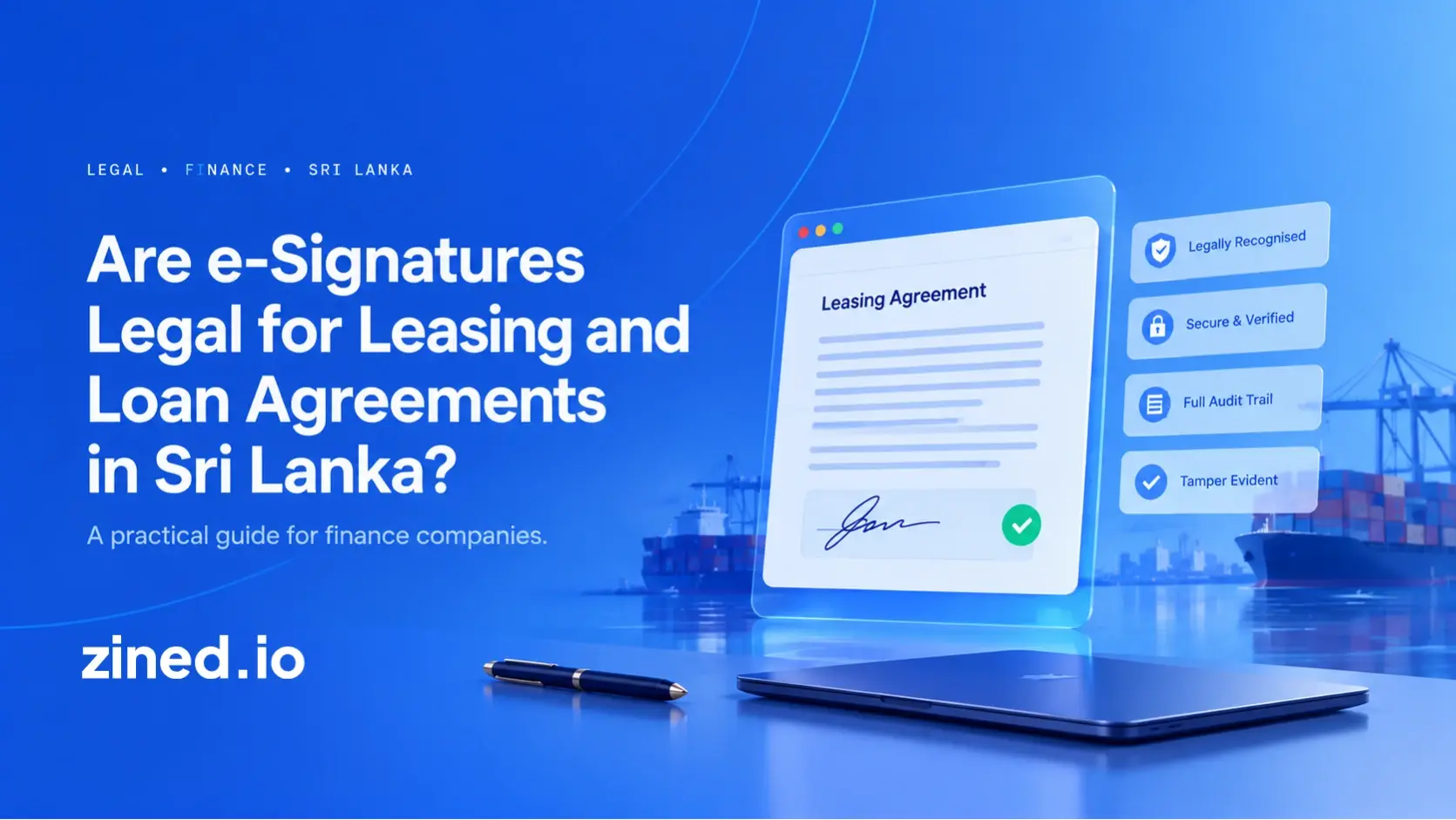
The legal question is rarely "Was it signed electronically?" It's "Can you prove who signed, what they signed, and when?" A good e-signature platform should give you:
- Signer identity checks: email and mobile OTP verification, with ID capture where needed.
- A full audit trail: every view, signature, and action timestamped and logged.
- Tamper evidence: any change to the document after signing can be detected.
- A certificate of completion: one record showing the whole signing history, ready for auditors.
A wet signature on paper tells you very little about how or when a document was signed. A proper digital audit trail tells you everything. See how Zined approaches this under legally binding signatures and security and compliance.
How to roll out e-signatures across your finance company
Most of our finance company clients see results within weeks by rolling out in this order:
- Internal approvals and HR documents. Your team sees the time savings right away and gets comfortable with the platform.
- Fixed deposit renewals and top-up loans. These are high volume with existing customers, so the savings grow fast.
- New leasing and loan agreements. This is where the biggest turnaround gains are: same-day signing with customers and guarantors anywhere.
Zined works with your legal and compliance teams to map which documents to move first, and runs a pilot at one or two branches so you can measure the difference before you scale. More on how this works for the sector is on our banking and financial services page.
The bottom line
E-signatures are legally recognised in Sri Lanka, and most finance company documents can be signed digitally today. Knowing the exclusions, choosing a platform with a strong audit trail, and rolling out in phases is what makes the move safe.
Want to see how this works for a leasing agreement? Book a Zined demo.
This article is general information, not legal advice. Please consult your legal counsel for your specific documents and circumstances.
Put the ideas into practice
Build a faster signature workflow with Zined
Use automated sends, reusable templates, AI-assisted reviews, and enterprise-ready controls to move agreements forward without adding friction for signers.
Keep reading
Related articles

Is an Electronic Signature Legally Valid in Sri Lanka?
Electronic signatures have been legally valid in Sri Lanka since 2006. But the law makes a distinction that most businesses miss and getting it wrong can leave your contracts unenforceable. Here is what you actually need to know.

Sri Lanka PDPA and eSignatures: What Your Business Must Know
Every time a document is sent for electronic signature in Sri Lanka, personal data is collected. Under the Personal Data Protection Act No. 9 of 2022, that creates obligations most businesses have not thought about yet.
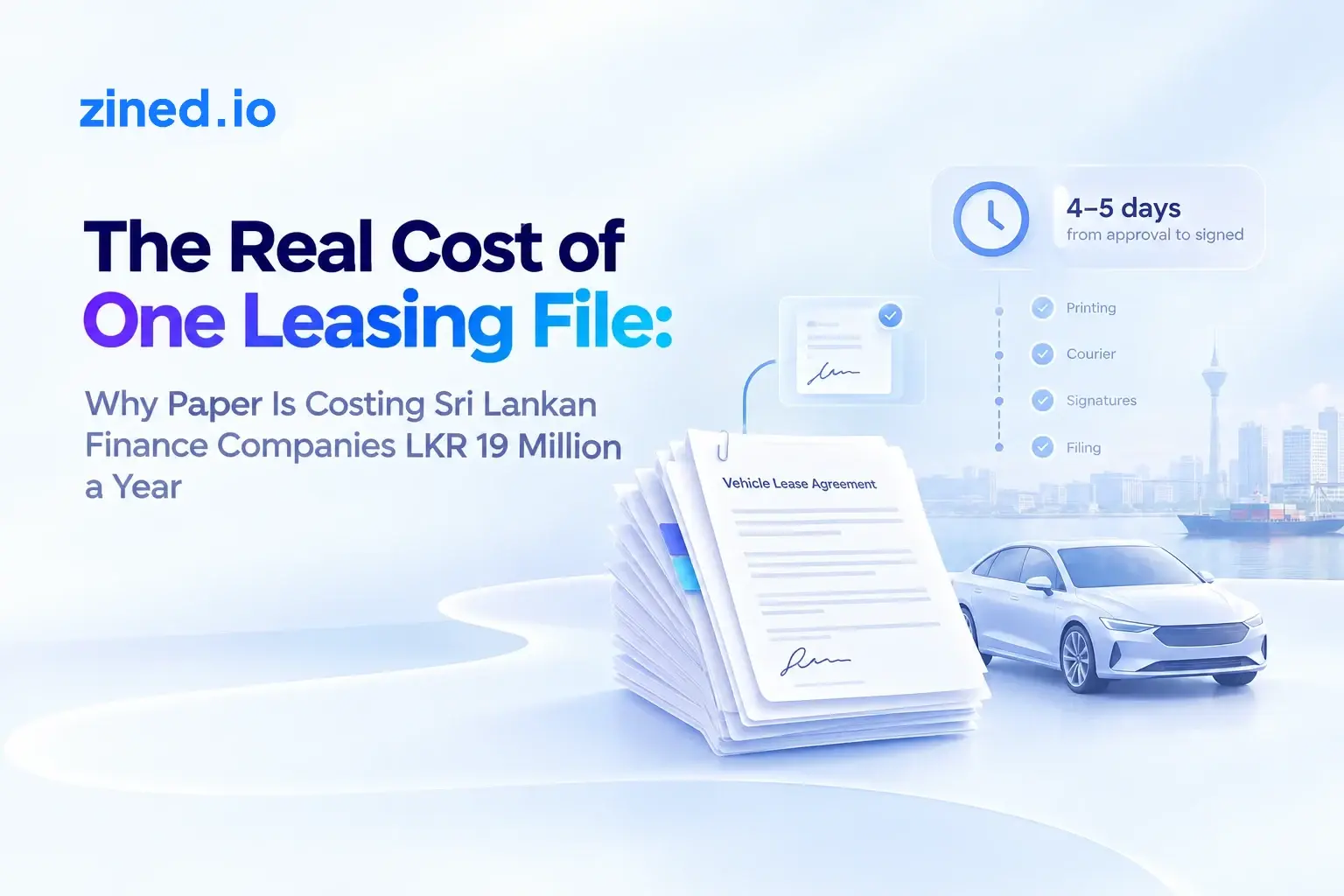
The Real Cost of One Leasing File: Why Paper Is Costing Sri Lankan Finance Companies LKR 19 Million a Year
One leasing file costs about LKR 4,000 in printing, courier, staff time and storage. See how paper adds up to LKR 19.2 million a year for a mid-sized finance company, and how e-signatures cut it.